
Quick answer: It depends far more on how the card is used than on the card itself. As a rule of thumb, a standard PVC card printed on a direct-to-card printer with a clear overlay lasts around one to two years as a daily-use employee badge, two to three years as a membership card used a few times a month, and far longer than needed as a gift or event card. Retransfer printing, a protective laminate and a card holder can stretch a badge to three to five years. Heat, sunlight and constant handling shorten it.
What wears a card out
- Friction: sliding in and out of wallets and pockets, rubbing against keys and other cards. This scratches the print first at the edges and on the photo.
- Bending: cards kept in back pockets or under phone cases bend and eventually crack, especially around a slot punch.
- Heat: standard PVC softens at temperatures a car dashboard can reach in a Saudi summer. A card left on the dashboard can warp in an afternoon.
- Sunlight: UV fades colours, especially on cards worn outdoors all day.
- Chemicals: hand sanitiser, perfume and cleaning products attack the print surface over time.
- Readers: tapping a chip card does no harm; swiping a magnetic stripe or inserting a contact chip card wears it gradually.
Expected lifespan by use
| Card use | Handling | Typical life, standard card with overlay | With retransfer or laminate |
|---|---|---|---|
| Employee badge, worn daily in a holder | Moderate | 1 to 2 years | 3 to 5 years |
| Employee badge, kept in a wallet | Heavy | Under 1 year to 1 year | 2 to 3 years |
| Site and construction ID, outdoors | Very heavy, sun and dust | 6 months to 1 year | 1 to 3 years |
| Gym, club or loyalty membership | Weekly or monthly | 2 to 3 years | 3 years or more |
| Student card | Daily, rough | About 1 school year | 2 years or more |
| Gift or event card | A few uses | Longer than needed | Not needed |
These are rules of thumb from typical use, not guarantees. A careful user can double them; a card kept in a back pocket can halve them.
How printing method changes durability
Direct-to-card with overlay
The printer prints dye directly onto the card and adds a thin clear overlay (the "O" in a YMCKO ribbon). This is the standard for most offices and protects against light wear. If your ribbon has no overlay panel, the print scratches much faster. See retransfer vs direct-to-card.
High-trust ribbons
Some ribbons add a tougher or security overlay. Evolis High Trust ribbons such as the R5F008EAA (SAR 398.48) are an example for Evolis printers.
Retransfer printing
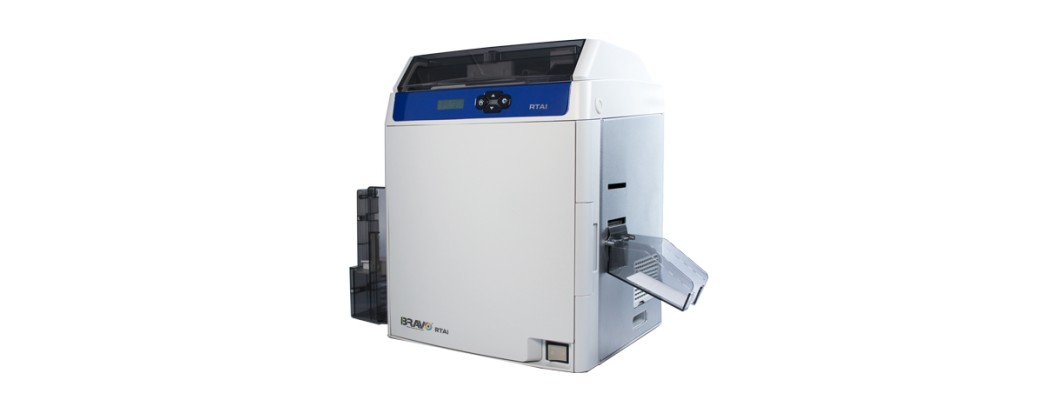
A retransfer printer prints onto a clear film and then bonds the film to the card. The image sits under the film rather than on the surface, so it resists scratching and fading much better. Examples: HID Fargo HDP5000e (SAR 17,077.50) with HDP clear film (SAR 980.25).
Lamination
Some printers add a thicker protective laminate after printing. This is the most durable option for cards that live outdoors or are handled roughly.
Card material matters too
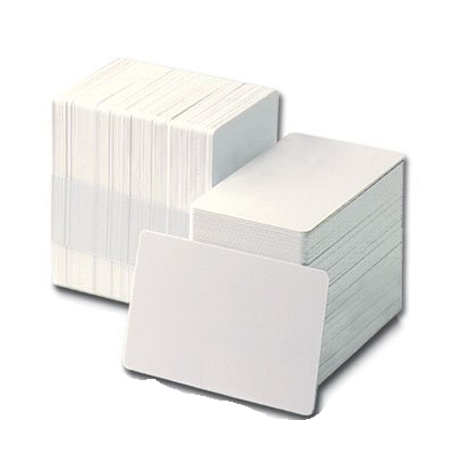
Standard PVC cards such as our white PVC cards (SAR 113.85 for 250) are right for most uses. For cards that will face heat, such as parking and site access cards that stay in vehicles, ask for composite PVC-PET cards, which hold their shape better at higher temperatures and are often recommended for retransfer printing.
Ways to make every card last longer
- Give staff a clear card holder (SAR 3.42) and a reel or lanyard. It is the cheapest upgrade there is.
- Print with a full YMCKO ribbon, not just colour without overlay.
- Keep cards out of cars, or use composite cards for anything that lives in a vehicle.
- Avoid a slot punch through the middle of the design; use a holder instead.
- Print an expiry date and plan reprints, so worn cards are replaced on schedule rather than when a guard can no longer read them.
Example: a contractor in Dammam
A contractor printed site badges on a direct-to-card printer and found most were unreadable within six months: dust, sun and badges clipped to vests. Switching to retransfer printing on composite cards, worn in holders, brought replacements down to roughly once a year per worker, and guards could read the photos again. The extra cost per card was small compared with reprinting twice as often.
When to reprint
Reprint when the photo or name is hard to read at arm's length, when a security feature is scratched through, when the card has visibly bent, or when the chip stops reading reliably. A badge a guard cannot check is no longer doing its job. Our employee badge checklist covers what should be on the new one.
Plan your budget
If you know how long cards last in your use, you can plan supplies: for example, 200 staff with a two-year badge life means about 100 cards a year plus spares for losses and new joiners. A running cost per card helps too: see card printer running cost per card.
Ask us
Count Express supplies card printers, ribbons, films and cards across Saudi Arabia from sales and distribution centres in Riyadh, Jeddah and Al Khobar. Tell us how your cards are used, and we will suggest the printer, ribbon and card that last. Message us on WhatsApp or browse ID card printers.
Lifespans are typical estimates, not guarantees. Prices include 15% VAT and may change.
Leave a Comment