
Quick answer: Most end-of-shift cash shortages come from seven causes: wrong change, payouts or refunds that were not recorded, a float that was wrong to begin with, counting mistakes, card payments rung up as cash, fake notes, and, less often, theft. Work through them in that order, from the most common and innocent to the least, and you will find most gaps within fifteen minutes. This guide gives you the checks for each one and a routine that stops the same gap coming back.
First, how big is the gap?
The size of the shortage is your first clue. Before you recount anything, write the gap down and look at its shape:
- An exact denomination (5, 10, 50, 100, 500 riyals): often one note given in change by mistake, or one note miscounted.
- An odd amount such as 37.50: usually a transaction problem, such as a refund, a discount or a cash sale entered as card.
- A round, large amount: check the float and any cash pickups first, then a payout that was not written down.
- A small gap every day: a habit, such as rounding change down, or a till that is shared between people.
The 7 causes and how to check each one
1. Wrong change
The most common cause by far, especially at busy times. A 50 taken for a 100, or change given for 500 instead of 100. Check: look at the denomination breakdown. If you have one 500 note fewer than you would expect for the day, think back over large payments. Training cashiers to leave the customer's note on top of the drawer until the change is handed over stops most of these.
2. Payouts and refunds not recorded
Cash taken out for a delivery driver, a supplier, cleaning materials or a refund to a customer, with no slip in the drawer. Check: ask everyone who used the till, then compare refunds and voids in the POS report with the slips you have.
3. The float was wrong at the start
If the opening float was short, the drawer will be short at the end even when every sale was perfect. Check: was the float counted and signed for at the start of the shift? If not, this is the first thing to fix.
4. Counting mistakes
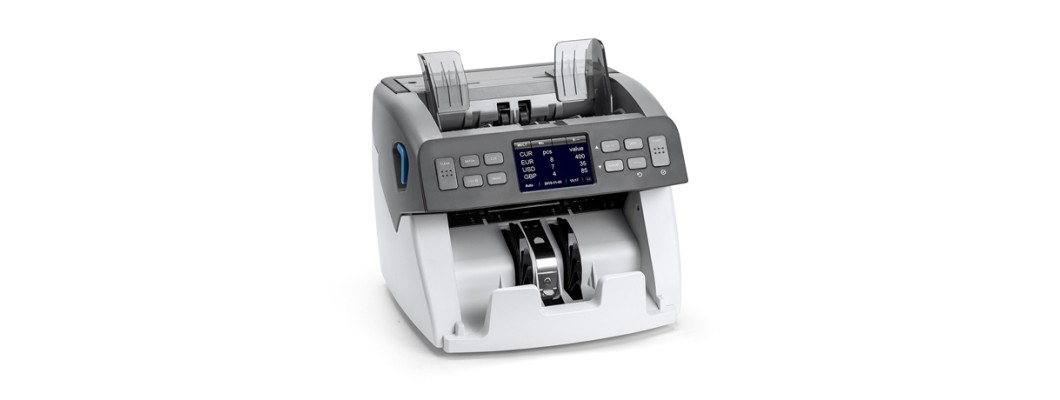
Two notes stuck together, a bundle counted twice, a 50 read as a 500 in a hurry. Hand counts at closing time, when everyone is tired, are the riskiest. Check: recount once, by machine. A value counter such as the CountExpress CX-7500 (SAR 4,554.00) gives the riyal total and the breakdown in one pass, so a second count is fast and settles the question.
5. Card or app payments rung up as cash
The customer paid by mada or a payment app, but the cashier pressed the cash key. The POS then expects cash that was never there. Check: compare the card terminal's total with the POS card total. If the terminal is higher by the same amount as the cash gap, you have found it.
6. Fake notes
A counterfeit note accepted during the day is a loss once it is spotted at the bank. Check: run the takings through a counter with UV and MG detection, or check suspect notes with a detector such as the Fin-144 (SAR 250.47). See our guide on how to detect fake riyal notes.
7. Theft
It does happen, but it should be your last conclusion, not your first. Patterns help: a gap that appears only on certain shifts, the same denomination missing again and again, or voids and no-sales just before closing. Check: compare shifts over two weeks, not one bad day.
A simple log that finds patterns
One shortage tells you little. A month of them tells you a lot. Keep a log with these columns for every shift:
| Date | Shift and cashier | Expected cash | Counted cash | Difference | Cause found |
|---|---|---|---|---|---|
| 12 Nov | Evening / A | 4,820 | 4,770 | -50 | Wrong change (50 for 100) |
| 13 Nov | Evening / B | 5,140 | 5,140 | 0 | - |
| 14 Nov | Morning / C | 2,310 | 2,272.50 | -37.50 | Refund not recorded |
After four weeks, sort by cashier and by cause. Most shops find that one or two causes explain nearly all the gaps.
Stop it happening again
- Count and sign the float at the start of every shift.
- One cashier per drawer. Shared tills make every gap impossible to trace.
- A slip for every payout, signed, kept in the drawer.
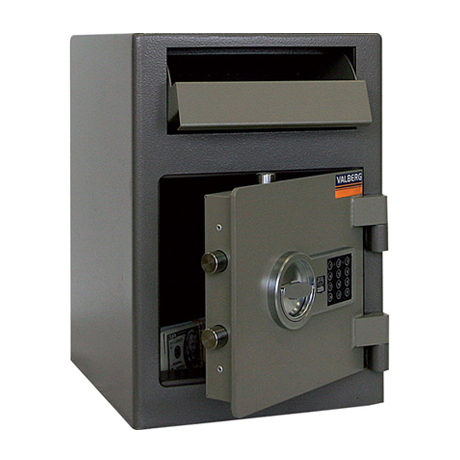
- Regular drops during the shift. Keep the drawer low and drop surplus cash into a deposit safe such as the Valberg ASD-19 EL (SAR 4,554.00) or the Valberg DSC 67 EK (SAR 11,954.25). Less cash in the drawer means smaller mistakes and less temptation.
- Count by machine, not by hand, and keep the printed or written breakdown with the cash-up sheet.
- Check fake notes as you count, not only at the bank.
For a quick, repeatable closing routine see how to count a full day's mixed takings in under 5 minutes, and for night shifts at fuel stations, night shift cash safety.
Quick questions
Should the cashier pay back a shortage? That is an HR and legal question, not a counting one. Agree a written policy with your HR adviser before deducting anything, and make sure the cause has really been found first.
What if the drawer is over, not short? Treat it the same way. An overage usually means change was short-paid to a customer or a sale was not rung up, and it deserves the same check.
Need equipment for the cash office?
Count Express supplies money counters, fake note detectors and deposit safes across Saudi Arabia, with sales and distribution centres in Riyadh, Jeddah and Al Khobar. Tell us about your tills on WhatsApp and we will suggest a setup, or browse money counting machines and deposit safes.
Prices include 15% VAT and may change.
Leave a Comment