
Quick answer: Wholesale vegetable, fruit and fish markets in Saudi Arabia run on early-morning cash: many buyers, mixed and worn notes, wet hands and little time. Traders who count fast and accurately use a compact value counter that handles mixed notes, take the cash off the stall as soon as a trade is done, and close each morning with one count against the sales book.
What makes market cash different
- Speed. Most of the day's trade happens in a few hours before sunrise, when buyers from restaurants, groceries and hotels load up.
- Worn and damp notes. Cash passes through many hands in a humid, wet environment, especially at fish markets.
- Mixed denominations. A single sale may be paid in 500s, 100s and a handful of 50s and 10s.
- Exposure. Cash kept in an apron or a drawer on an open stall is easy to lose and hard to account for.
A morning routine for a market stall
1. Start with a counted float
Count the change float before trading starts and write it down. Every variance later in the morning is measured from this number.
2. Count each large payment on the spot
Hand counting a thick wad while the next buyer waits is where mistakes happen. A compact value counter such as the Kisan Newton Mini counts mixed notes and shows the total, so both sides agree on the amount in seconds.
3. Move cash off the stall
Every hour, or after each big trade, move cash from the stall into a locked drop box or a deposit safe in the office or truck cabin.
4. Close with one count against the sales book
At the end of trading, count everything once on the machine and compare it with the day's sales book or invoices. Record the difference, even when it is zero. Our daily cash-up routine shows a simple sheet you can use.
5. Prepare the bank deposit
Sort and batch the notes for the deposit machine, as in our guide to preparing cash for a bank deposit.
Handling worn, damp and dirty notes
Let damp notes dry flat before counting; wet notes stick together and cause double-note stops. Clean the counter's sensors and rollers often, because dust and residue build up quickly in a market. For the common stop reasons and their fixes, see why a money counter miscounts. If hygiene matters to your staff or customers, a Mclean 1000 plasma money sterilizer treats notes before they go back into the till.
Which counter suits a market trader?
- One stall, mostly large notes: a compact value counter such as the Newton Mini.
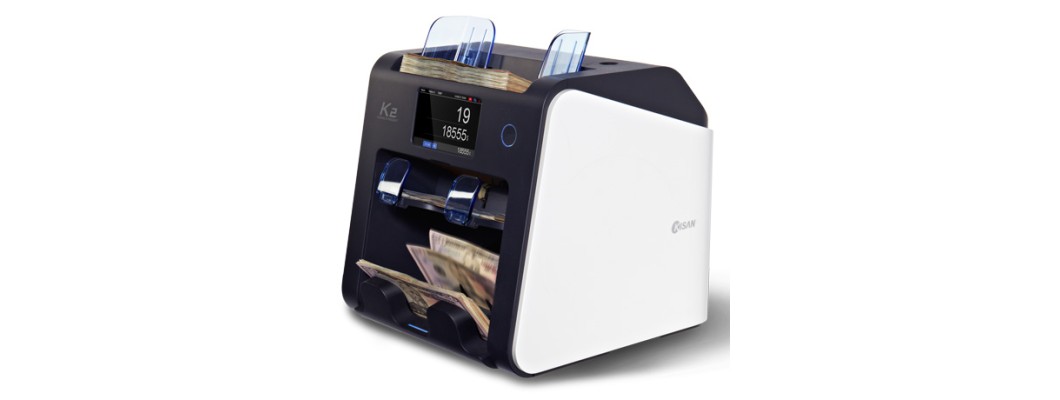
- Several stalls or a trading office: a two-pocket counter such as the Kisan K2, which separates denominations and rejects as it counts.
- Fake note risk on large notes: make sure the counter has UV and magnetic detection, and keep the checks from how to spot a fake riyal note in mind for single notes.
Why buy from Count Express
- Stock, technical teams and distribution centers in Riyadh, Jeddah and Al Khobar, with delivery to Dammam, Makkah, Madinah and every region of Saudi Arabia.
- 2-year warranty on money counting machines and fake note detectors.
- All prices include 15% VAT, with a tax invoice in your company name.
Frequently asked questions
Can a money counter handle damp notes?
Not reliably. Damp notes stick together and trigger double-note stops, so dry them flat first and keep the counter itself away from water.
Is a small money counter accurate enough for a market stall?
Yes, if it is a value counter with fake-note detection and you keep the sensors clean. It is far more accurate than counting a thick wad by hand under time pressure.
How often should a market trader clean the counter?
Wipe it daily and clean the sensors and rollers at least weekly in a dusty or humid market.
Does a money sterilizer replace a counter?
No. A sterilizer only treats notes for hygiene; you still need a counter to count them and check them for fakes.
Leave a Comment